
Sustainability has been catapulted as a business imperative for Public Listed Companies (“PLCs”) in Malaysia since May 2015 when Bursa Malaysia signed the voluntary commitment of the Sustainable Stock Exchange (“SSE”) to promote environmental, social and governance (“ESG”) performance in capital markets.
The SSE is a United Nations Partnership Programme jointly organised by four UN agencies. Launched in New York in 2009, the SSE initiative provides a peer-to-peer learning platform for stock exchanges to collaborate with investors, regulators and listed companies in advancing corporate transparency and performance relating to ESG matters.
As an SSE Partner Exchange, Bursa Malaysia needed to introduce changes to its Main Market Listing Requirements in October 2015. The amendments entail that all PLCs in Malaysia must include a Sustainability Statement with disclosures on the management of material economic, environmental and social risks and opportunities in their annual reports.
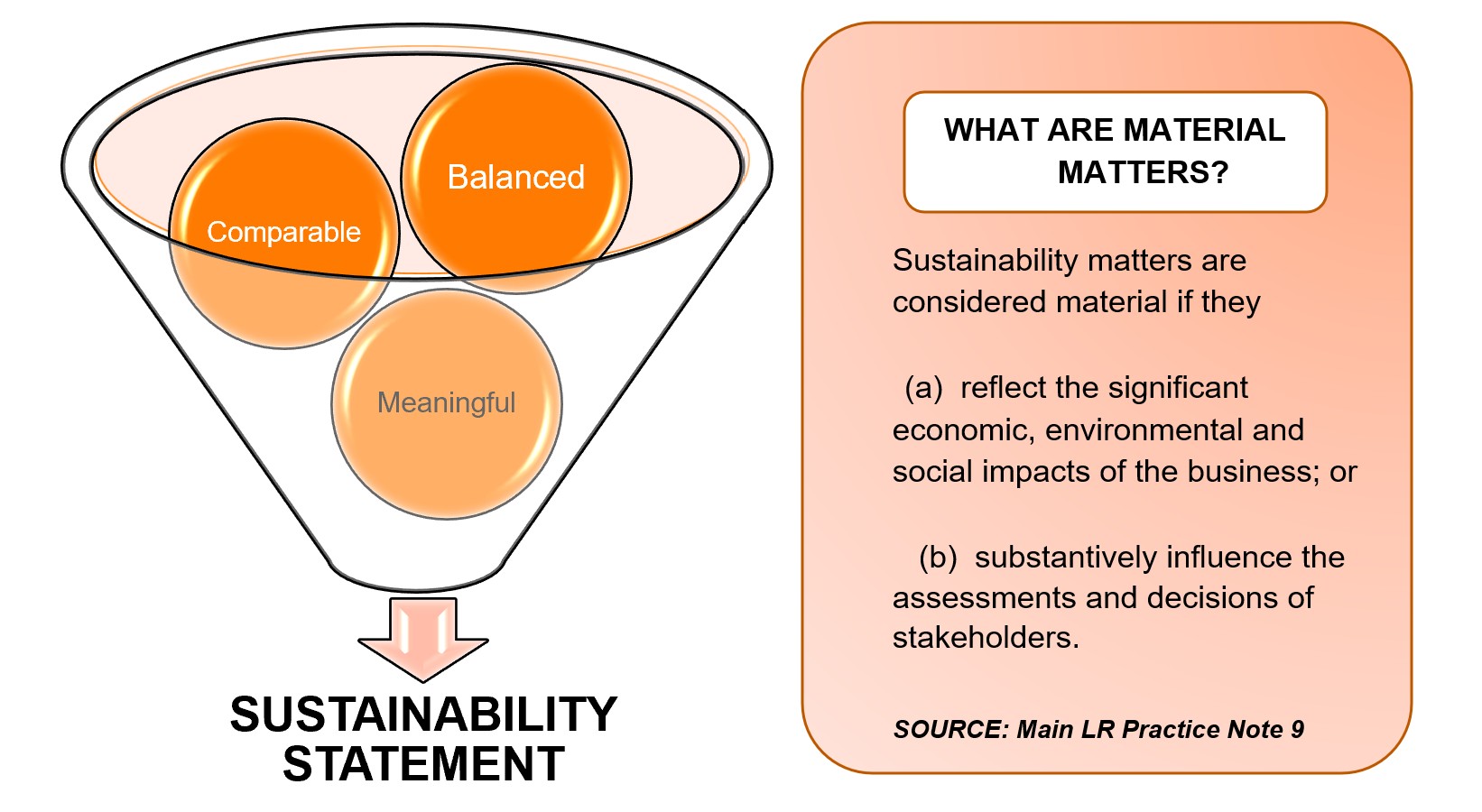
Replacing the previous requirement of the Corporate Social Responsibility statement, the Sustainability Statement must contain the following disclosures:
- Governance Structure to manage the EES risks and opportunities
- Scope of the Sustainability Statement and basis for the scope
- Material Sustainability Matters with explanation on why the topics are material, how they were identified and managed, including details on policies, measures or actions taken, and relevant indicators demonstrating performance
Operating as the ESG performance report card, a data-driven and science-based Sustainability Statement can prove daunting and time consuming to produce. Unless the PLC has a dedicated Sustainability or ESG team, it would make more sense to outsource this task to a competent consulting firm to ensure that the report is compliant with Bursa Malaysia’s requirements.